
Africville Museum in Halifax
The most important museum in Halifax, NS is also the one that is the most difficult to reach. But don’t let that stop you. Located

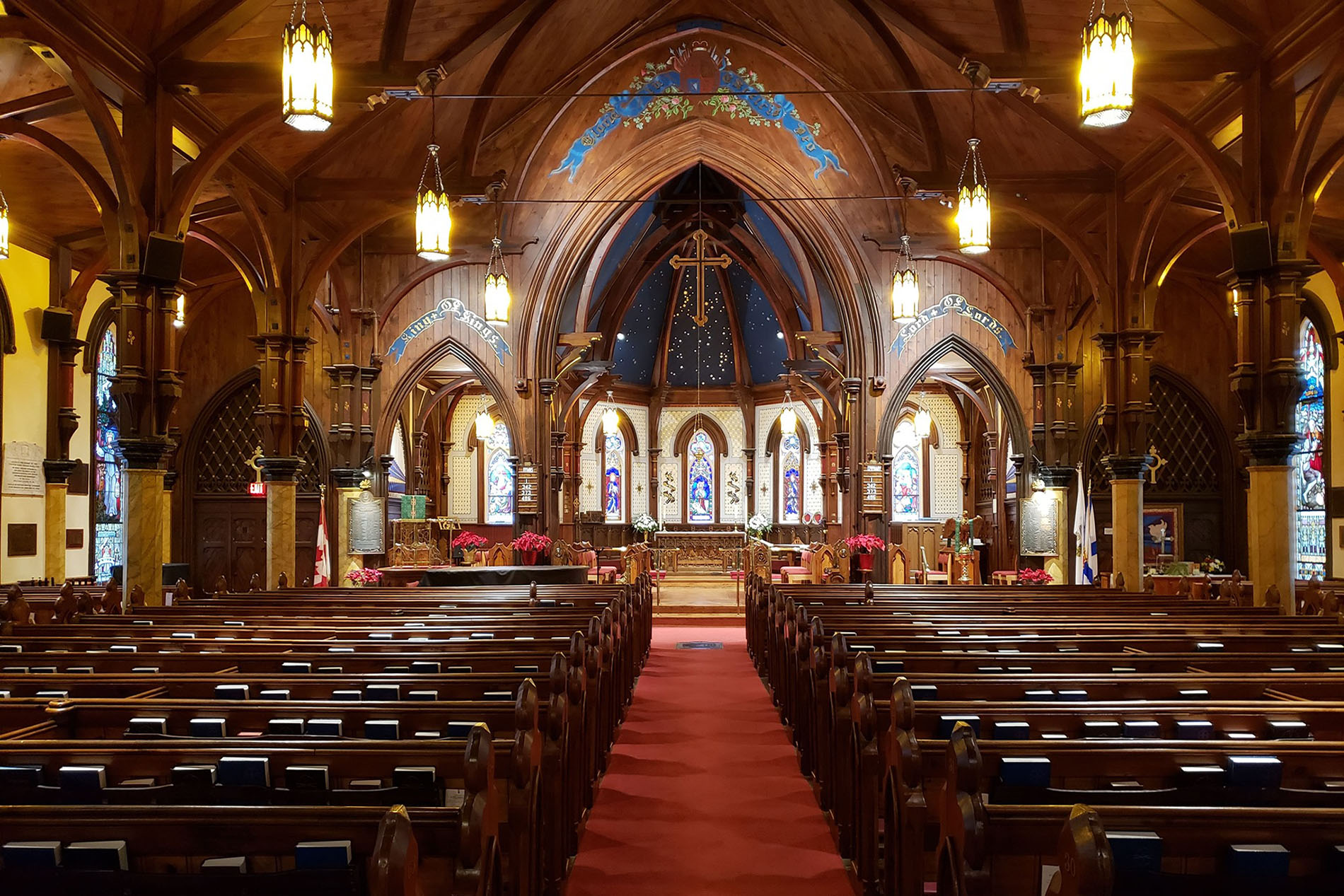
Learn the incredible story and detective work to find the lost meaning of the painted night’s sky above above the altar in Lunenburg, Nova Scotia’s historic St. John’s Anglican Church.

Right in the heart of beautiful Lunenburg, Nova Scotia — the UNESCO-designated Old Town beloved for its historic wooden architecture — St. John’s Anglican Church is more than just a stunning wooden landmark. Behind its graceful Carpenter-Gothic façade lies one of the most compelling stories of restoration, community, and celestial mystery in Canada!
On Halloween night in 2001, a fire ravaged St. John’s Church, gutting much of the interior and leaving only a shell of the once-beloved sanctuary. What could be salvaged — including elements of the altar, pews, and memorial plaques — was carefully rescued. In the years that followed, the Lunenburg community rallied, raising funds and gathering old photographs, archival records, and even life-event snapshots to guide the painstaking rebuild.
When the church reopened in 2005, it was reconstructed virtually beam by beam, echoing its pre-fire appearance — but with a secret revealed in the process.
The altar area, in particular, became the centre of one of the most magical parts of the restoration.
The company selected to restore the original Gothic artwork of the church was Era Studio in Lunenburg, operated by Julie-Jayne (JJ) Coolen and her mother Margaret Coolen. Part of their scope was to recreate the delicate painted surfaces, including a deep-blue vaulted ceiling above the altar dotted with hundreds and hundreds of gold stars.
At first, the star pattern seemed decorative. But the Coolens began to suspect something more – the stars were not randomly arranged.
“We looked at them and didn’t recognize any of the star groups. It looked like they might just simply be put up at random, but it didn’t seem like someone would go to that trouble to put just random stars on the ceiling.”
So the Coolens turned to Dr. David Turner, an astronomer at Saint Mary’s University, and suggested that Turner look at the stars’ alignment around 2,000 years ago — on Christmas Eve in the year of Jesus’ birth. Dr. Turner then made a striking discovery: the constellation Perseus, among others, could be identified in the ceiling.
Here’s where the story deepens: by using planetarium software to model the night sky, Turner worked backward to sunset on December 24, about 2,000 years ago, at Lunenburg’s latitude. He found that the stars above the altar aligned almost exactly with how the sky would have appeared on that traditional first Christmas Eve. From Dr. Turner’s own account in 2005:
“Following Margaret’s suggestion of the first Advent, I set the planetarium software to reproduce the scene from two thousand years ago, using sunset of the first Christmas, established by setting the Sun on the western horizon, as a means of initiating a further search. Because of my background in writing scripts for planetarium Christmas Star productions, I initially set the scene for Bethlehem.
“Perseus was 10° further from the north celestial pole in that era, so it did swing over the eastern horizon each day two thousand years ago. To my surprise, the sky for sunset of the first Christmas placed Perseus much as it appeared in the ceiling star scene, but the orientation was skewed. A readjustment to the latitude of Lunenburg was all that was needed to bring the scene into close agreement with the star pattern facing me from the “finder chart” I had made for the eastern ceiling panel.”
It’s a poetic mystery: who originally painted this ‘Mariner’s Sky’? Some speculate it may have been a sailor or someone familiar with celestial navigation. As the One Road at a Time travel blog puts it, had the church not burned, this story of faith, art, and science might never have resurfaced.
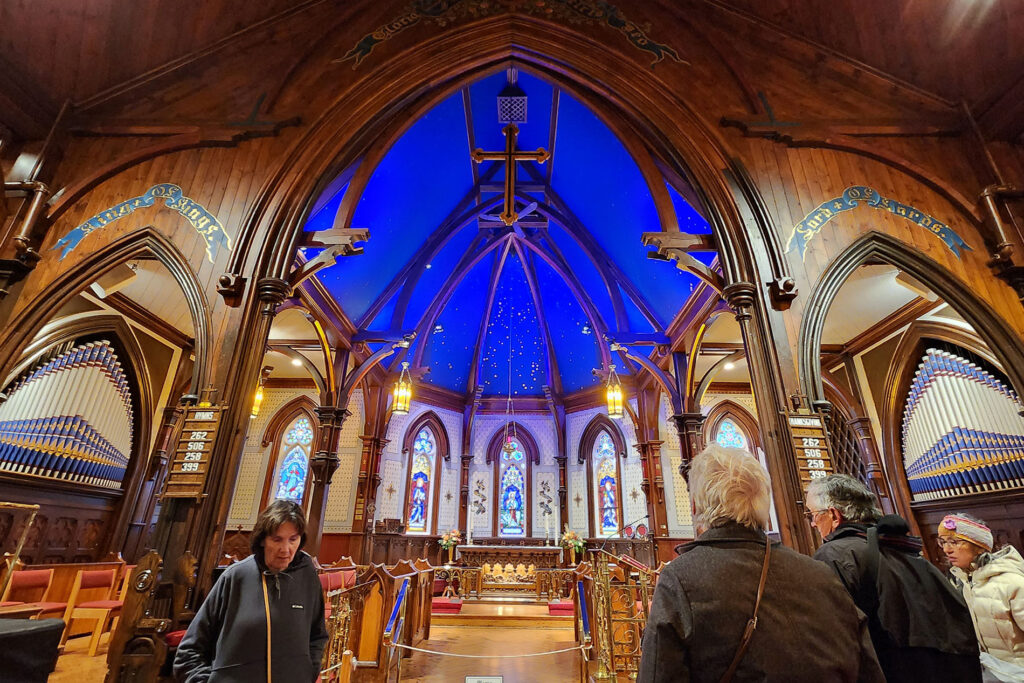
When you step inside St. John’s Church today, the restored altar and its starry vault aren’t just beautiful — they’re a living testament to Lunenburg’s resilience and creativity. It’s a must-see for anyone on a heritage tour, and the perfect stop on a Picture Perfect Tours walk through historic Lunenburg.
Tour guides will often share how the altar survived, how it was rebuilt, and the extraordinary meaning behind the ceiling — inviting visitors to pause, look up, and reflect on the intersection of maritime history, faith, and the heavens.
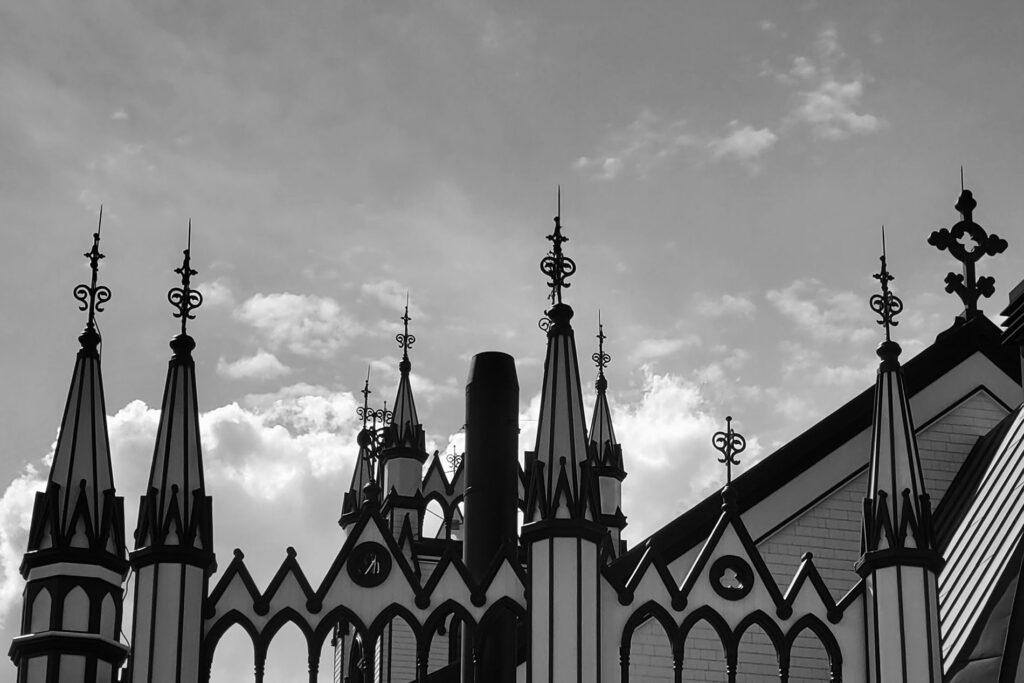
Visit St. John’s on your next Lunenburg tour with Picture Perfect Tours — and don’t miss the chance to stand beneath 700+ golden stars that whisper of lost craftsmanship, scientific wonder, and a community’s love for its heritage.
The most important museum in Halifax, NS is also the one that is the most difficult to reach. But don’t let that stop you. Located

Picture Perfect Tours Wins 2025 Tripadvisor Travellers’ Choice Award in Halifax, Nova Scotia Picture Perfect Tours is proud to announce that we’ve been named a
Our Favourite Restaurants in Halifax for 2026 Where Locals Eat (& Where We Send Our Guests) Like most liberal-arts school graduates, after university I ended